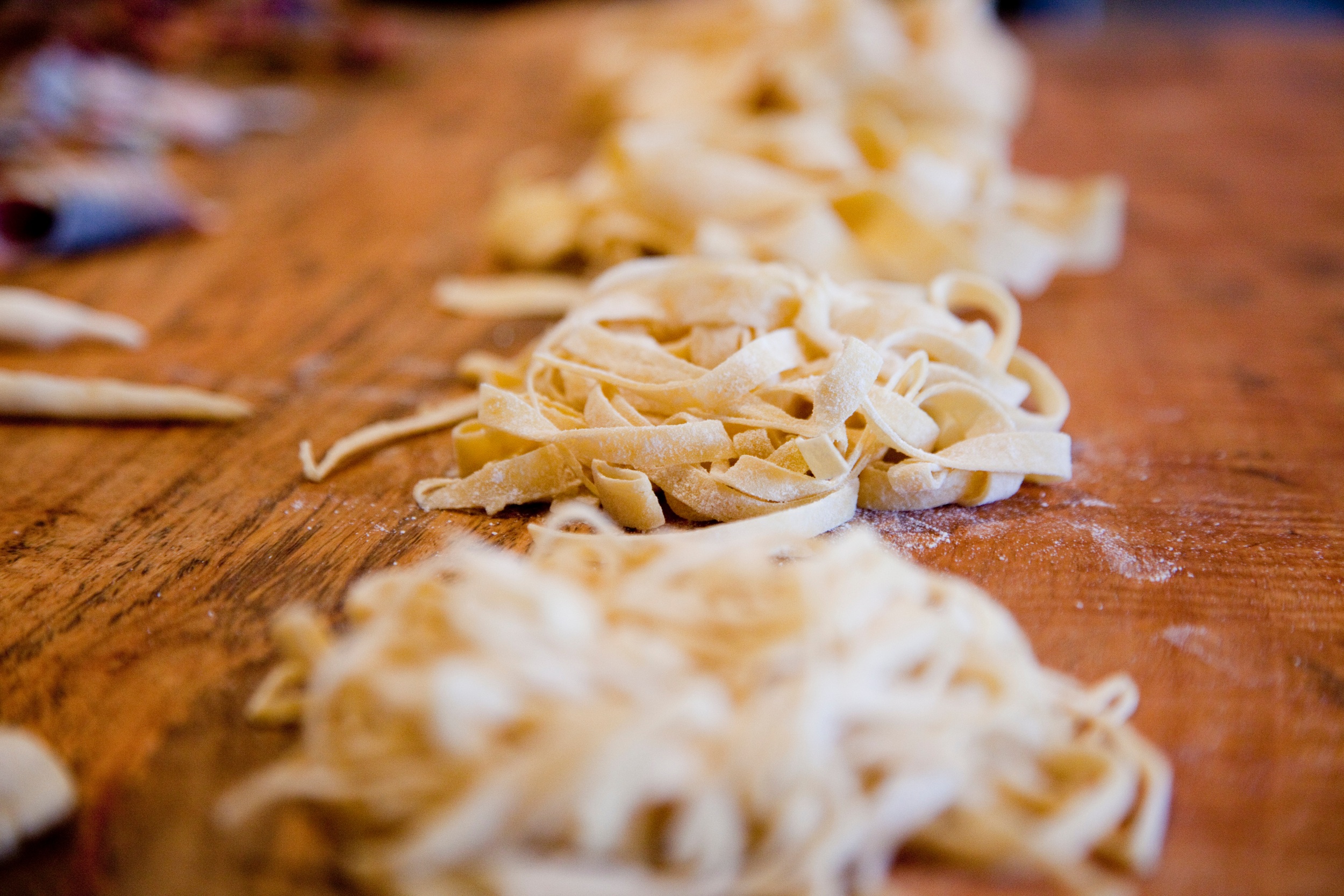
Pasta has the magical ability to bring a smile to almost anyone’s face.
Even in its simplest form – cooked store bought pasta with a little butter or olive oil – it offers a basic satisfaction.
And it is so easy to make that even the most unlikely of cooks can succeed.
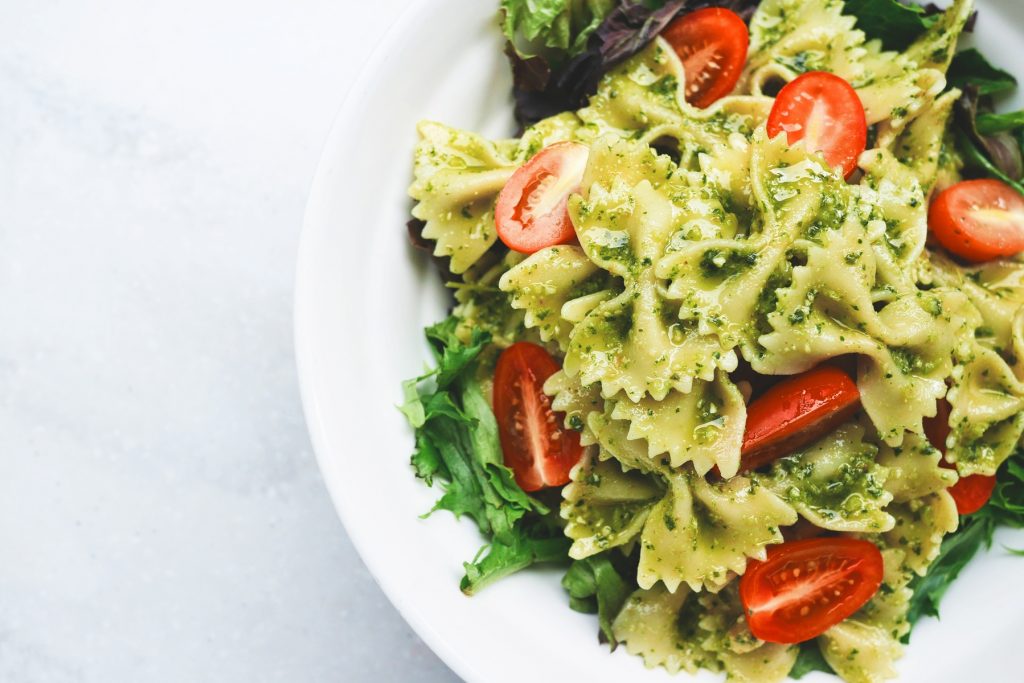
Dressed artfully, eating pasta becomes a divine experience.
This is the pasta of my youth.
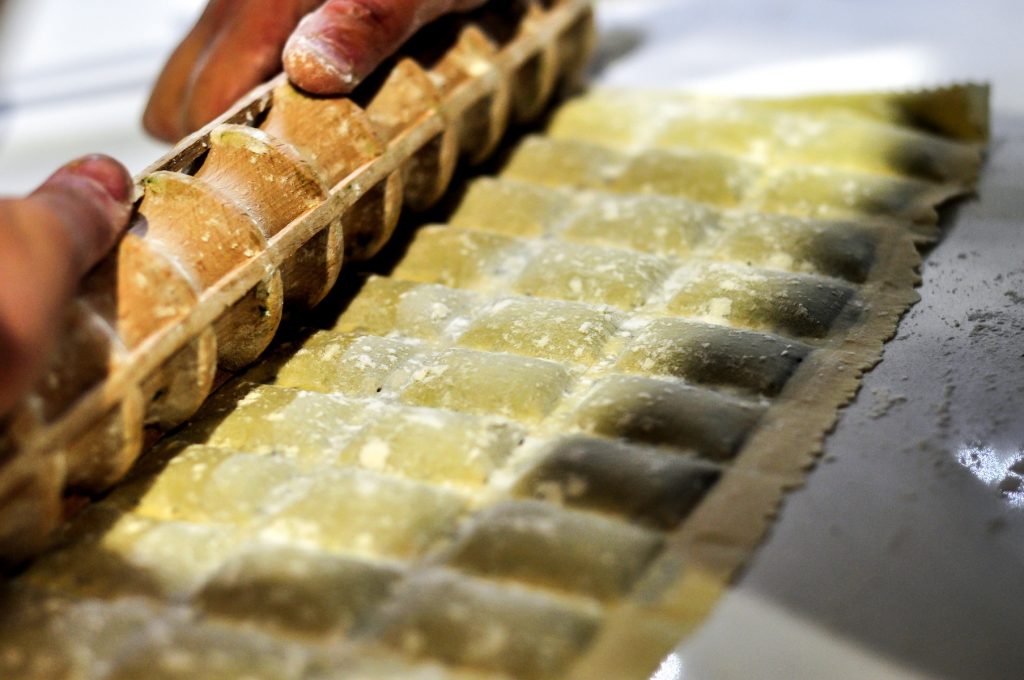
Raised by my southern Italian and Sicilian mother who spent many a mostly unwilling hour in the kitchen making 150 ravioli or manicotti shells before she was allowed out of the house on a Saturday night.
Pasta is the intersection between nourishment, medicine, art, religion, and family.
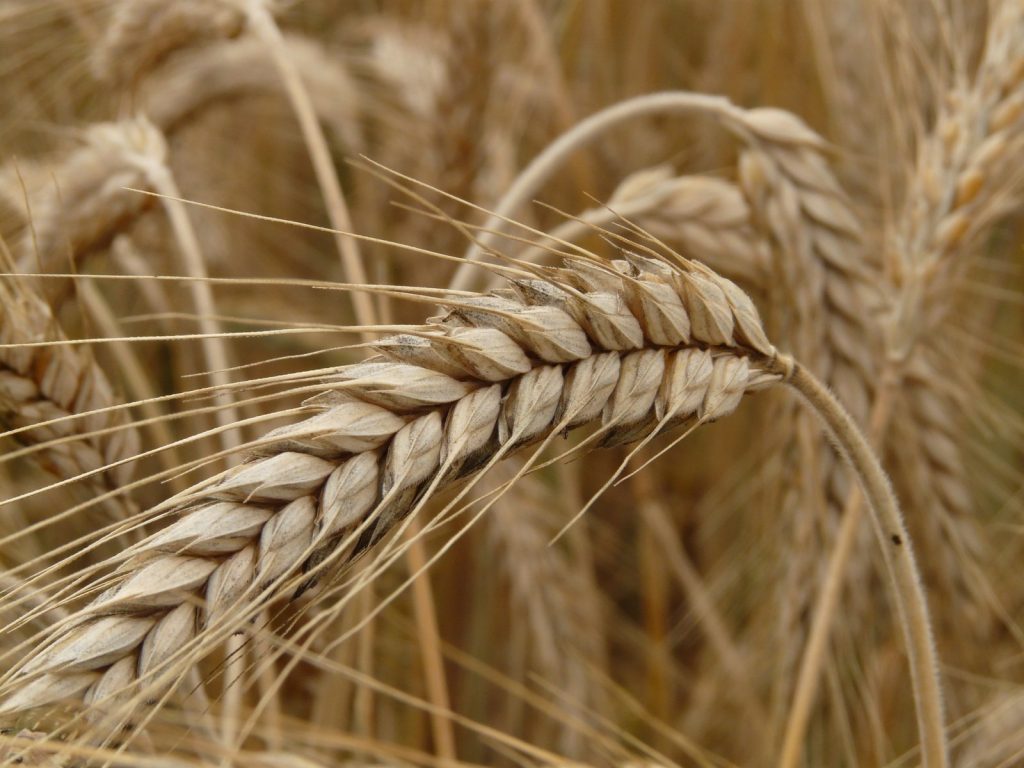
From simple ingredients, the fruit of the earth, grass seed, is threshed and milled into flour.
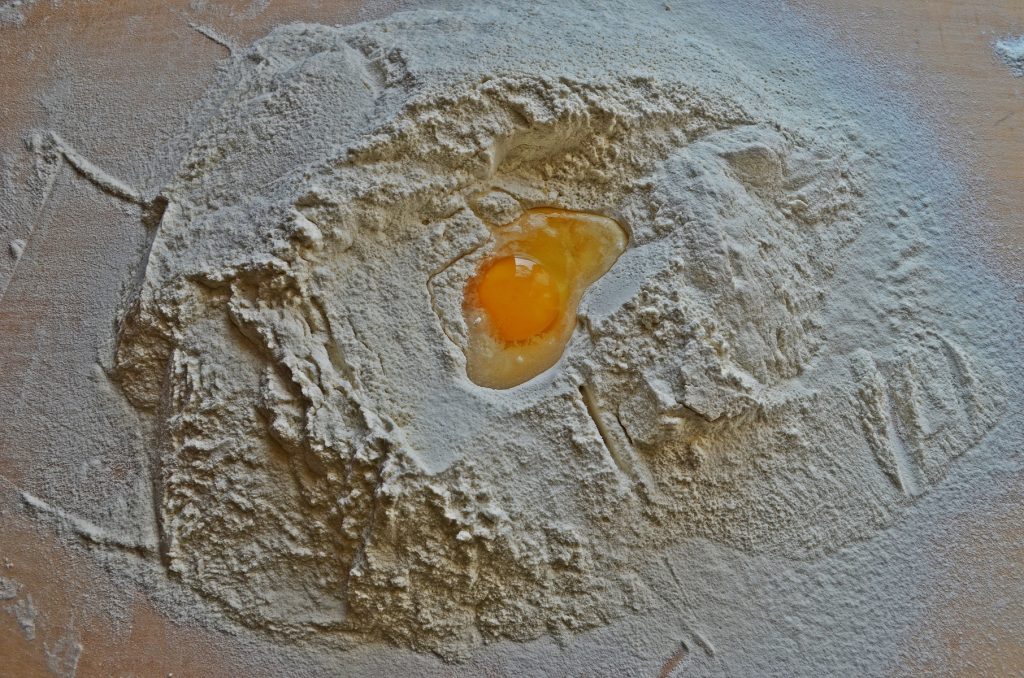
A small pile of flour, heaped into a hill, dimpled into a volcano with fingers, and blended with water or egg becomes clay.
Rolled between your hands and a wooden board, the clay becomes long coils of snakes.
Rolled between a wooden board and wooden pin, it flattens into a sheet so thin, it moves like fabric.
Snake or sheet, it awaits the final twists and cuts to complete it’s metamorphosis from grass to food.
Cooking is a sacred and transformative act.
One we have mostly forgotten in the United States, with it’s teenage enthusiasm to abandon the past and tradition. In a culture that forces us ever further into sixty hour work weeks and households stripped of grandparents with two full time working parents or single parent households, even our peanut butter and jelly sandwiches come premade and frozen.
The tyranny of just trying to get by can make it difficult for any of us to even consider making something like pasta from scratch. Becoming a mother has given me great compassion for how exhausting and difficult life can be. And yet, it was motherhood that provided the final inspiration to turn my hand toward flour and water. And to realize how unfathomably simple it can be.